
There are no products listed under this category.
Tel: 972-516-0692

CMS Magnetics is a direct manufacturer and master supplier of commercial-grade neodymium magnets (NdFeB), the strongest permanent rare-earth magnets available. Engineered from an alloy of neodymium, iron, and boron, our sintered magnets deliver energy products from N35 utility grades up to ultra-high N52 and N55. In stock at our Garland, Texas warehouse for direct B2B supply, OEM production runs, and retail orders.
There are no products listed under this category.
Neodymium Iron Boron (NdFeB) permanent magnets represent the apex of modern commercial magnetic energy. Formed through powder metallurgical sintering of rare-earth elements (principally neodymium, iron, and boron, frequently alloyed with dysprosium and praseodymium), these third-generation rare-earth alloys provide the highest saturation magnetization and maximum energy product ($BH_{max}$) of any commercial material. CMS Magnetics supplies precision sintered NdFeB in standard production grades from N35 through ultra-dense N52 and N55, as well as thermally stabilized high-coercivity grades (M, H, SH, UH, and EH series) engineered for continuous operation in severe industrial thermal environments.
| Grade | Remanence ($B_r$) | Coercivity ($H_{cb}$) | Intrinsic Coercivity ($H_{ci}$) | Max Energy Product ($BH_{max}$) | Max Working Temp ($T_{max}$) |
|---|---|---|---|---|---|
| N35 | 11.7 – 12.2 kG (1.17 – 1.22 T) | ≥ 10.8 kOe (≥ 860 kA/m) | ≥ 12.0 kOe (≥ 955 kA/m) | 33 – 36 MGOe | 176°F (80°C) |
| N42 | 12.8 – 13.2 kG (1.28 – 1.32 T) | ≥ 11.5 kOe (≥ 915 kA/m) | ≥ 12.0 kOe (≥ 955 kA/m) | 40 – 43 MGOe | 176°F (80°C) |
| N48 | 13.8 – 14.2 kG (1.38 – 1.42 T) | ≥ 11.6 kOe (≥ 923 kA/m) | ≥ 12.0 kOe (≥ 955 kA/m) | 46 – 49 MGOe | 176°F (80°C) |
| N52 | 14.3 – 14.8 kG (1.43 – 1.48 T) | ≥ 11.2 kOe (≥ 891 kA/m) | ≥ 11.0 kOe (≥ 875 kA/m) | 50 – 53 MGOe | 158°F – 176°F (70–80°C) |
| N38SH | 12.2 – 12.6 kG (1.22 – 1.26 T) | ≥ 11.4 kOe (≥ 907 kA/m) | ≥ 20.0 kOe (≥ 1592 kA/m) | 36 – 39 MGOe | 302°F (150°C) |
| N35UH | 11.8 – 12.2 kG (1.18 – 1.22 T) | ≥ 11.0 kOe (≥ 875 kA/m) | ≥ 25.0 kOe (≥ 1990 kA/m) | 33 – 36 MGOe | 356°F (180°C) |
While standard sintered NdFeB magnets possess a Curie Temperature ($T_c$) of approximately 590°F (310°C)—the theoretical threshold where all ferromagnetism ceases—their usable maximum operating temperature ($T_{max}$) is restricted by their operating load line (permeance coefficient, $P_c$) and intrinsic coercivity ($H_{ci}$). Standard N-series magnets experience irreversible magnetic flux loss when exposed to temperatures exceeding 176°F (80°C). For elevated operational environments, such as high-torque brushless DC motors (BLDC), alternator rotors, and downhole telemetry tools, CMS Magnetics engineers high-coercivity grades:
Because sintered neodymium is an anisotropic material, its magnetic axis is locked during pressing within a high-intensity magnetic field prior to thermal sintering. It can only be magnetized along this predetermined axis of orientation:
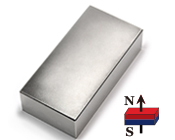
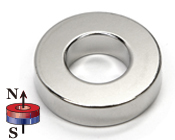
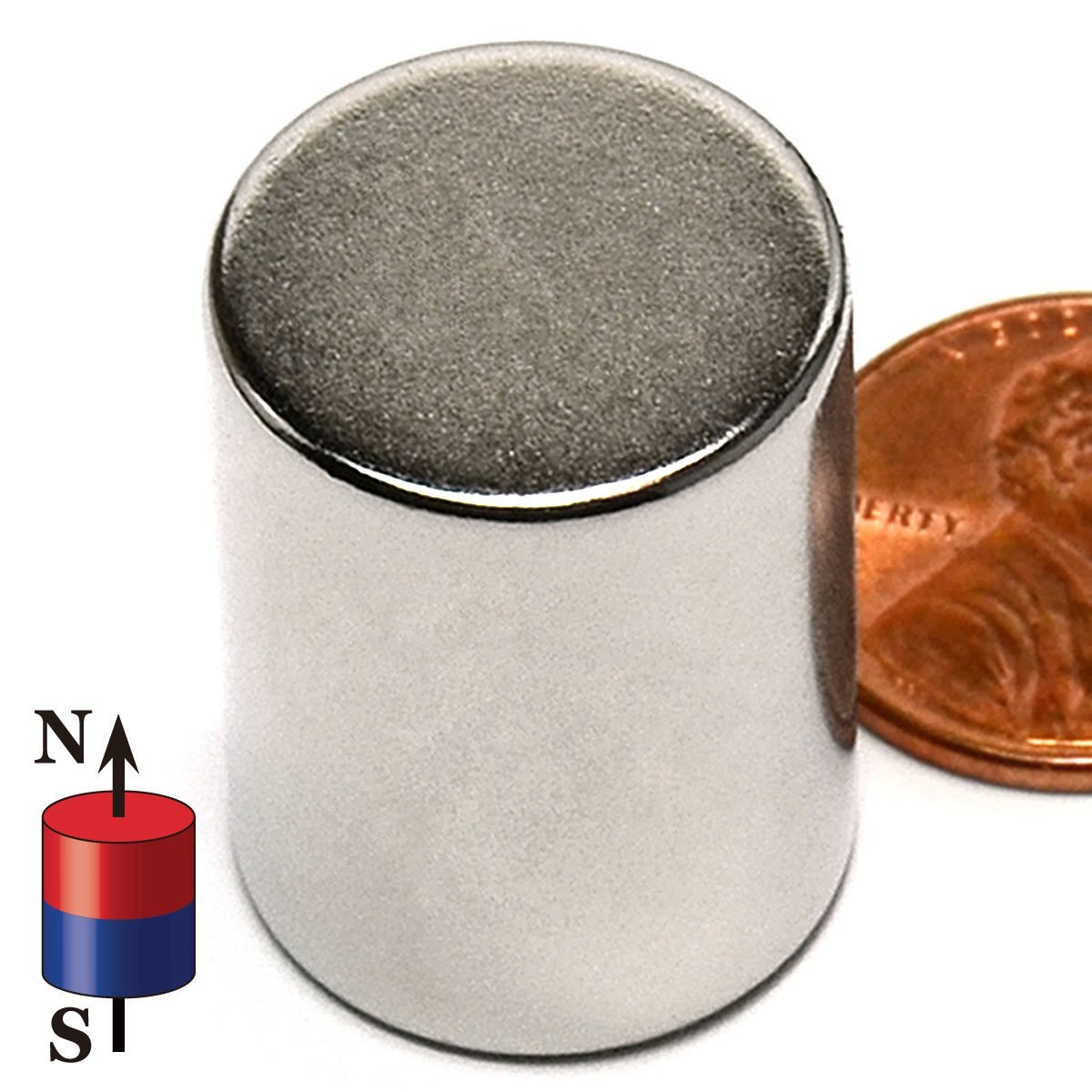
Magnetized through the thickness or length (parallel to cylindrical or rectangular axis). North and South poles reside on the opposing flat surfaces. Standard for disc, block, ring, and pot magnets.
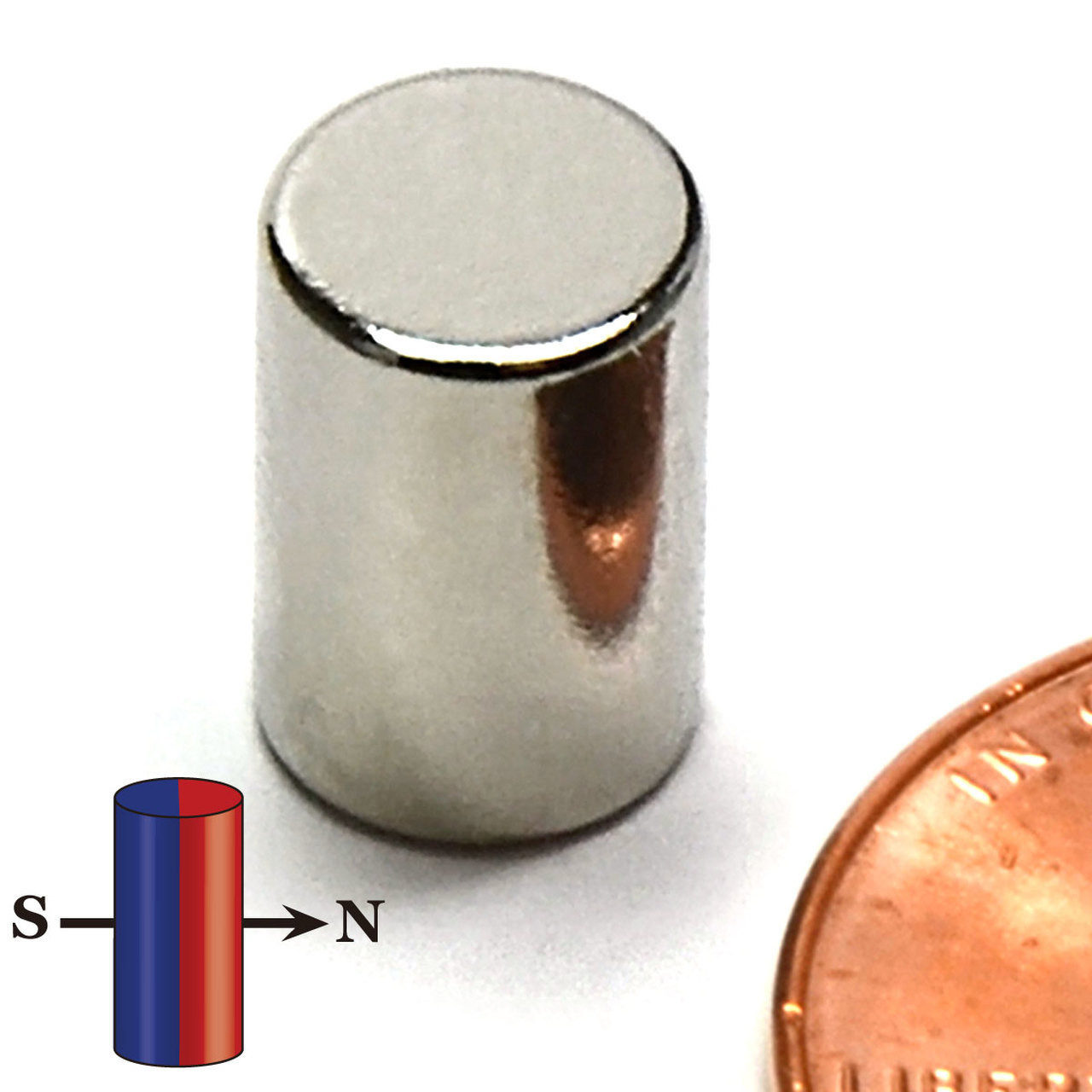
Magnetized across the diameter or width (perpendicular to cylindrical length). Ideal for rotary sensors, magnetic roller assemblies, and precision shaft encoders.
Multiple alternating North and South poles created across a single face using dedicated pulsed magnetizing fixtures, optimizing holding force at zero air gap.
Raw NdFeB alloy contains over 60% iron by weight and exhibits rapid intergranular corrosion and powder decrepitation if exposed to atmospheric moisture or acid vapors. CMS Magnetics employs commercial passivation and multi-stage barrier plating to assure long-term operational integrity:
Sintered neodymium magnets are ceramic-like in mechanical hardness and brittleness (Vickers Hardness HV ≈ 600). Never attempt to cut, drill, turn, or machine neodymium magnets using conventional high-speed steel (HSS) or carbide shop tooling. Doing so will fracture the magnet, ignite flammable pyrophoric rare-earth dust, and destroy the factory corrosion barrier. CMS Magnetics produces custom shapes, steps, and counterbores utilizing industrial wire EDM, diamond grinding wheels, and precision laser cutting prior to post-sintering plating.
For assembly fixturing, we recommend structural acrylic adhesives (such as Loctite AA 324 or AA 330) or toughened two-part epoxies. To prevent localized stress concentrations and ensure uniform flux distribution, maintain an engineered adhesive bondline gap of 0.003" to 0.005" (75–125 μm) using solid glass spacer beads.
While handheld Hall-effect surface Gaussmeters verify field strength at a single point, CMS Magnetics tests mission-critical OEM production lots utilizing calibrated 3-axis Helmholtz coil systems paired with 3-channel vector fluxmeters. This process calculates total magnetic flux ($\Phi$), verifies bulk magnetic dipole moment ($M$), and detects angular alignment errors (≤ 1°) to guarantee batch-to-batch repeatability for sensor arrays and electric drive assemblies.
Mechanical Crushing & Pinch Hazard: Neodymium magnets accelerate toward ferrous metals with thousands of pounds of per-square-inch dynamic pressure. Always handle separated magnets using non-magnetic polymer